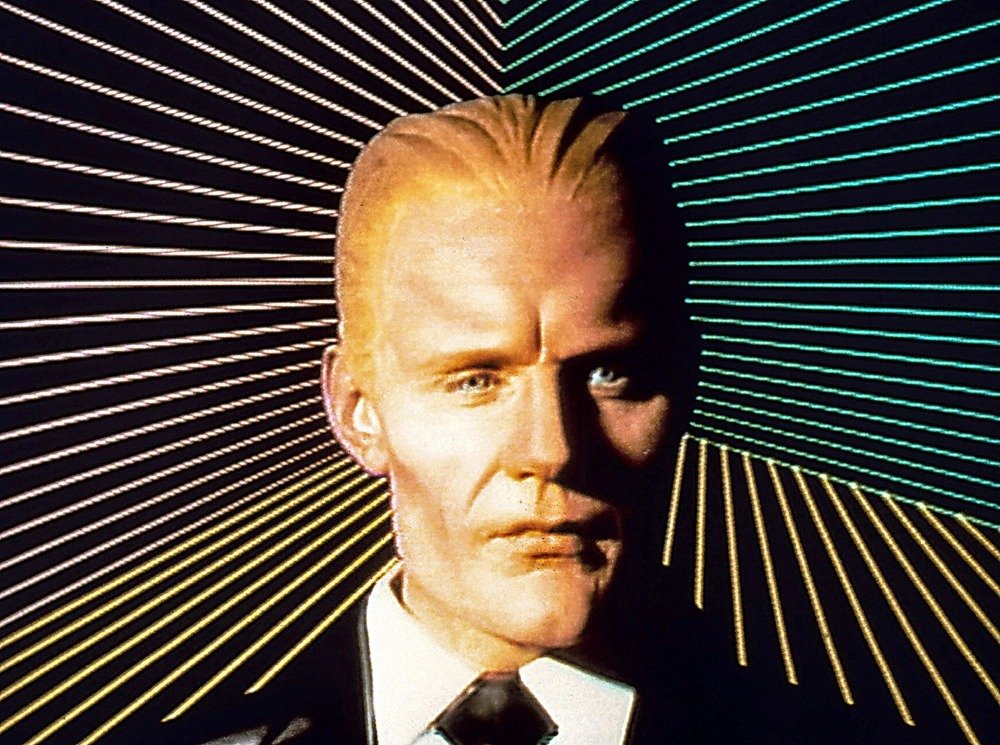
You might not know Max Headroom by name, but chances are, you've seen his iconic, stuttering, pixelated visage somewhere. Perhaps in a meme, a music video, or a fleeting cultural reference. Born from the anxieties and technological optimism of the 1980s, The Max Headroom Legacy isn't just a relic of retro-futurism; it's an unsettlingly accurate roadmap for the digital world we inhabit today. This wasn't just a character; he was a phenomenon that blurred the lines between human and machine, reality and simulation, and in doing so, offered a profound, if sarcastic, commentary on our media-saturated existence.
Before deepfakes made us question every video, before virtual influencers garnered millions of followers, and long before broadcast signals were routinely threatened by digital interference, Max Headroom was there, twitching and laughing through the static. He was a harbinger, a digital prophet whose distorted grin reflected the uncomfortable truths of an impending technological revolution.
At a Glance: What You'll Learn About Max Headroom's Enduring Impact
- A Fictional Genesis: Discover how Max Headroom, despite being presented as the "world's first computer-generated TV host," was actually an actor in elaborate makeup, cleverly using early tech to create a groundbreaking illusion.
- A Satirical Mirror: Understand how his stuttering, sarcastic personality served as a sharp critique of 1980s consumerism, media sensationalism, and the emerging digital age.
- The Prescient Series: Explore "Max Headroom: 20 Minutes into the Future," the short-lived sci-fi show that uncannily predicted issues like hacking, media monopolies, corporate control, and the pervasive nature of digital identity long before they became commonplace.
- The Unsolved Broadcast Heist: Relive the infamous 1987 "Max Headroom Incident," a real-world signal hijacking that cemented his legacy as a symbol of digital anarchy and media vulnerability.
- His Digital Footprint Today: See how Max Headroom influenced everything from cyberpunk aesthetics to modern digital avatars, and why his themes of identity, control, and media power are more relevant than ever in our AI-driven world.
The Glitch in the Machine: Max Headroom's Dystopian Genesis
Imagine a television landscape on the cusp of a digital revolution, a world where MTV was king, but computers were still clunky beasts, largely confined to scientific labs or the most dedicated enthusiasts. It was into this fertile ground that Max Headroom was born. Conceived in Britain by the visionary trio of George Stone, Annabel Jankel, and Rocky Morton, he wasn't meant to be a profound philosophical statement initially. Rather, he was designed to be a distinctive host for music videos on Channel 4, introduced with the audacious claim of being "the world’s first computer-generated TV host."
The genius of Max Headroom, however, lay in the beautiful deception. While the claim of being fully CGI was a brilliant marketing hook, the reality was far more analog and craft-intensive. The man behind the pixelated mask was actor Matt Frewer, who spent hours in prosthetics and makeup, his face painstakingly sculpted to mimic the angular, slightly unsettling features of a low-resolution digital avatar. Early computer graphics were then applied to further enhance the illusion, creating a truly unique aesthetic that felt both futuristic and deeply unsettling. This blend of practical effects and nascent CGI was groundbreaking, offering a glimpse into a future where the line between human and digital would become increasingly blurred.
His personality was as distinct as his appearance: a stuttering, distorted voice that seemed to fight against the very medium it inhabited, coupled with a quick wit and a biting, sarcastic humor. Max Headroom wasn't just a host; he was a character designed to satirize a superficial, media-driven society. He reflected the era's complex blend of optimism for technological advancement and an underlying anxiety about its potential impact on human communication and identity. In many ways, he embodied the very tension of the 1980s, a decade bridging the analog past with the digital future, full of both promise and palpable unease.
From UK Cult Hit to US Icon: New Coke and Beyond
Max Headroom's unique blend of novelty and sharp social commentary quickly made him a cult phenomenon in the UK. His success, much like an infectious digital virus, soon spread across the Atlantic. In the US, his peculiar charm and distinctive look landed him an unexpected, yet perfectly ironic, role: spokesperson for New Coke. This brief, bizarre advertising campaign saw Max Headroom, a symbol of digital disruption and questioning authority, peddling one of the most infamously misjudged product launches in history. It was a testament to his immediate pop culture penetration, even if the product itself flopped.
But his most impactful contribution, the true genesis of his enduring legacy, arrived in the form of a short-lived, yet profoundly influential, science fiction television series: "Max Headroom: 20 Minutes into the Future." The very title was a warning, a subtle nod to the idea that the dangers and complexities depicted were just around the corner, not in some distant, fantastical future.
"20 Minutes into the Future": A Sci-Fi Prophecy Unveiled
The pilot episode of "Max Headroom: 20 Minutes into the Future" wasn't just another TV show; it was an hour-long dystopian narrative that set the stage for a world uncannily similar to our own. It introduced Edison Carter, a fearless investigative journalist working in a future dominated by powerful, omnipresent media corporations. After a near-fatal accident, Carter's consciousness and personality are digitally replicated, giving birth to Max Headroom – a rogue, artificial intelligence existing within the broadcast network. This digital replica, free from the constraints of its human counterpart, quickly becomes a digital outlaw, questioning corporate control, media ethics, and the very nature of reality itself.
The series evolved to feature Max not just as a narrative character but also as a meta-commentator, often breaking the fourth wall to parody talk shows, critique rampant consumerism, and dissect media sensationalism. He was a digital clown holding up a distorted mirror to society, his stuttering observations cutting through the noise. The technical creation of this world was a marvel of its time. Beyond Matt Frewer’s film and TV career-defining performance in extensive prosthetics and makeup, the show utilized early CGI, hand-painted backdrops, and primitive computer graphics to create Max’s digital realm. These limitations, ironically, gave the series a distinctive, almost tactile quality, making the digital world feel both alien and surprisingly real.
"20 Minutes into the Future" was remarkably prescient. It explored themes of information overload, media monopolies controlling public discourse, data privacy invasions, the weaponization of advertising, and the dangerous potential of hacking. It showed a world where corporations dictated truth and entertainment was a form of control, long before these concepts became daily headlines. The show didn't just entertain; it forced viewers to confront uncomfortable questions about identity in a digital age and the pervasive influence of technology on every aspect of human life.
The Unscripted Nightmare: The 1987 Max Headroom Incident
Perhaps no single event cemented Max Headroom’s cultural impact and prophetic status more than the chilling 1987 "Max Headroom Incident." This wasn't fiction; this was a terrifying, real-world broadcast signal intrusion that felt like something ripped directly from "20 Minutes into the Future." On November 22, 1987, an unidentified individual, wearing a Max Headroom mask and sunglasses, hijacked two television stations in Chicago.
The first incident, on WGN-TV, was brief but alarming. At approximately 9:14 p.m., during a sports broadcast, the screen suddenly cut to static, followed by 8 seconds of the masked figure, accompanied by distorted audio. The broadcast engineers quickly regained control, but the unsettling image had been seared into the minds of viewers.
The perpetrators weren't done. Later that night, around 11:20 p.m., they struck again, this time targeting WTTW (PBS) during an episode of Doctor Who. This intrusion lasted for a much longer 90 seconds. The masked figure appeared, gyrating and making bizarre, nonsensical statements, including a parody of Max Headroom's New Coke slogan ("Catch the Wave!") and mocking WGN sports commentator Chuck Swirsky. The audio was heavily distorted, making much of it unintelligible, but the visuals were clear enough to convey a profound sense of unease. The broadcast engineers, unable to immediately stop the hijack, could only watch in horror until the signal was finally cut.
The perpetrators were never caught, and the incident remains one of the most famous unsolved broadcast signal intrusions in history. It wasn't just a prank; it was a profound, tangible demonstration of the vulnerability of our media infrastructure, and how easily the lines between fiction and reality could be blurred by a determined, technologically savvy individual. It was a real-world "glitch" that Max Headroom himself would have likely found darkly amusing, reinforcing his core message about media control and the power of rogue digital entities.
Why Max Headroom Still Matters: A Digital Prophet's Legacy
Max Headroom left an indelible mark on pop culture, but more importantly, he left a conceptual framework for understanding our increasingly digital world. The series "20 Minutes into the Future" was truly ahead of its time, foreseeing issues that are now part of our daily anxieties. Long before Cambridge Analytica, the show was illustrating how data could be weaponized. Before major tech companies became media monopolies, Max was cautioning against corporate control of information. Before privacy breaches became commonplace, he highlighted the erosion of personal data.
His influence extends far beyond mere prediction. Max Headroom is referenced across various media, from the visually stunning, self-aware nods in Eminem’s “Rap God” music video to appearances in DC Comics like “Max Headroom: The Carrot Book,” and numerous video games that draw on his aesthetic and themes.
He is widely recognized as a precursor to many modern digital phenomena. Think of the rise of virtual influencers like Lil Miquela, entirely digital entities with millions of followers. Consider the proliferation of digital avatars that represent us in online spaces. And, most chillingly, reflect on the emergence of deepfakes – synthetic media that can convincingly alter or create videos and audio, making it nearly impossible to distinguish real from fabricated. Max Headroom, a "computer-generated" character played by an actor, was, in a sense, the original deepfake, questioning the nature of authenticity in media.
His aesthetic—the sharp angles, the pixelation, the blend of corporate slickness with technological disruption—deeply influenced the cyberpunk genre, shaping its visual language and thematic concerns. Artists and designers continue to draw inspiration from his distinctive look, which perfectly encapsulates the early digital era's blend of fascination and fear.
Ultimately, Max Headroom's legacy is that of a digital prophet. He didn't just entertain; he prompted us to ask complex questions about identity in a world saturated by screens, about who controls the narrative, and about the very nature of reality when so much of it is mediated by technology. He dared us to look "20 minutes into the future" and confront what we saw, a future that, uncannily, now feels like our present.
Decoding Max's World: Common Questions & Enduring Insights
Even decades later, Max Headroom sparks curiosity. Here are some answers to common questions about his unique existence:
Was Max Headroom really computer-generated?
No, not in the way we understand CGI today. The "world's first computer-generated TV host" claim was largely a brilliant marketing illusion. Actor Matt Frewer spent hours undergoing extensive makeup and prosthetic application to achieve Max's distinctive look. Early computer graphics were then used for subtle enhancements and effects processing, creating the "digital" appearance. It was a masterful blend of practical effects and nascent technology, making the illusion incredibly convincing for its time.
What made his voice so unique?
Max Headroom's signature stuttering, distorted voice was created by processing Matt Frewer's spoken lines through various audio effects, including pitch shifting and digital delays. This gave him an artificial, almost robotic quality that was both unsettling and instantly recognizable, perfectly matching his glitchy visual persona.
Did the show predict deepfakes?
Conceptually, yes. While the term "deepfake" didn't exist, "Max Headroom: 20 Minutes into the Future" grappled with the core themes of synthetic media and manipulated identity. The creation of Max Headroom himself as a digital replica of Edison Carter, capable of independent thought and action, directly foreshadows the anxieties surrounding AI-generated content that blurs the lines of authenticity and can be used to create convincing, yet false, representations of individuals.
How did Max Headroom influence the cyberpunk genre?
Max Headroom's entire aesthetic and thematic content aligned perfectly with the emerging cyberpunk movement. His angular, pixelated look, set against a backdrop of corporate-controlled media and a technologically advanced yet socially decaying society, became a visual touchstone. The show's exploration of artificial intelligence, corporate power, data manipulation, and the struggle for individual identity within a hyper-connected, media-saturated world are all foundational elements of cyberpunk fiction. He helped popularize the visual and narrative language that would come to define the genre.
Beyond the Static: Applying Max Headroom's Lessons Today
The Max Headroom Legacy isn't just about understanding a piece of 1980s pop culture; it's about gaining a critical lens through which to view our current digital landscape. The "20 Minutes into the Future" he presented is no longer future; it's our present.
Consider the implications for how we consume news and information. Max Headroom warned of media monopolies and manipulated narratives. Today, with the rise of AI-powered news feeds, personalized algorithms, and the proliferation of misinformation, his warnings are more urgent than ever. We need to cultivate a similar skepticism, a "glitch" in our own thinking, to question sources, analyze motives, and seek diverse perspectives rather than passively accepting what's presented.
Max Headroom also challenged us to think about digital identity. In an age of avatars, virtual personas, and AI companions, the concept of a digital "replica" that takes on a life of its own is no longer sci-fi. Understanding the blurred lines between our physical selves and our digital footprints, and the potential for manipulation or loss of control over these digital echoes, is crucial for navigating modern life. His very existence as a "human" in a "digital" form forced audiences to confront the evolving definition of personhood.
Finally, the Max Headroom Incident serves as a potent reminder of the fragility of our digital infrastructure and the power of individuals to disrupt it. In an increasingly interconnected world, where everything from power grids to financial markets relies on complex digital networks, the potential for unexpected "glitches" – be they malicious hacks or unforeseen system failures – is ever-present. This incident underscores the importance of cybersecurity, digital ethics, and the constant vigilance required to maintain the integrity of our shared digital spaces.
The Future is Still 20 Minutes Away
Max Headroom, with his disembodied voice and jerky movements, was a character designed to embody the future. But he was more than that; he was a mirror, reflecting our hopes and fears about technology back at us with a sarcastic grin. His legacy isn't just about nostalgia for a bygone era; it's a living commentary on the present.
As we continue to build increasingly complex digital worlds, interact with more sophisticated AI, and grapple with the ever-present challenge of discerning truth from fabrication, the questions Max Headroom posed remain vital. Who controls the information? What is real? What does it mean to be human in a digital age?
The answers are still unfolding, but Max Headroom's unique, glitchy presence serves as an enduring reminder: the future isn't just coming; it's already here, and it's probably just as strange and unpredictable as we always imagined, always "20 minutes into the future." So, pay attention to the static, question the screen, and maybe, just maybe, you'll catch a glimpse of the next glitch before it catches you.