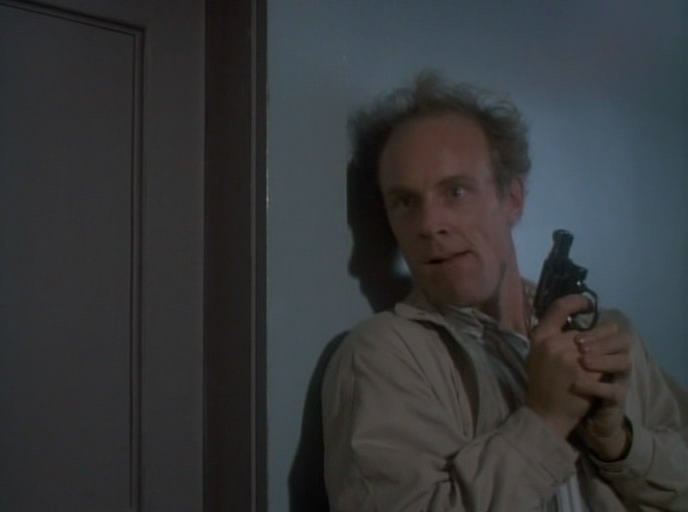
When you talk about actors who embody a role so completely that they become synonymous with it, and then proceed to defy typecasting across decades, you’re talking about Matt Frewer. His career isn't just a list of credits; it's a masterclass in versatility, a chameleon-like ability to transform—from a glitching digital icon to a menacing supernatural entity, a quirky scientist to a voice beloved by millions. Dive into Matt Frewer's Memorable TV Appearances, and you’ll find a landscape rich with innovation, humor, and a surprising depth that continually captivates audiences.
He's one of those rare talents whose face, or even just his voice, instantly evokes a specific character, yet somehow, he’s never truly "just" that character. Instead, he’s a craftsman, meticulously building each performance, leaving an indelible mark on television history, spanning from groundbreaking sci-fi to beloved animated series and dark, dramatic thrillers.
At a Glance: What You'll Discover About Matt Frewer's TV Legacy
- The Max Headroom Phenomenon: How Frewer brought the 1980s' most iconic digital personality to life, reshaping pop culture in the process.
- A Master of Adaptation: His prolific work across multiple Stephen King television projects, often tackling complex, unsettling roles.
- Genre-Defying Range: From medical comedies (Doctor Doctor) to cult sci-fi hits (Eureka, Orphan Black) and gritty horror (Fear the Walking Dead).
- The Unseen Star: A deep dive into his extensive and influential voice-acting career, from Disney villains to classic cartoon characters.
- Why He Endures: The unique qualities that make Matt Frewer an enduring and unforgettable presence on the small screen.
The Man, The Myth, The… Max Headroom? Understanding Matt Frewer's Journey
Before he became a pixelated persona or an apocalyptic prophet, Matthew George Frewer was a Washington D.C.-born son of Canadian parents, raised in Peterborough, Ontario. His journey into acting wasn't accidental; it was forged in the hallowed halls of the Bristol Old Vic Theatre School in England, where he graduated from its rigorous three-year acting course in 1980. This classical training provided the bedrock for a career defined by an astonishing range and a willingness to embrace the unconventional.
His personal life, stable since his 1984 marriage to Amanda Hillwood and their daughter, stands in stark contrast to the often chaotic or fantastical worlds he inhabits onscreen. This grounding seems to fuel his transformative performances, allowing him to dive headfirst into roles that push boundaries and challenge perceptions.
Channel Changer: The Unforgettable Birth of Max Headroom
For many, the name Matt Frewer is inextricably linked to the distinctively stuttering, digitally rendered face of Max Headroom. Emerging from the TV film Max Headroom in 1985 and then starring in the subsequent 1987-1988 American television series, Max wasn’t just a character; he was a phenomenon, a sardonic, artificially intelligent icon born of a near-fatal accident involving Network 23 journalist Edison Carter (also played by Frewer).
Frewer's portrayal was a stroke of genius, combining physical comedy, vocal dexterity, and an uncanny ability to convey synthetic emotion. He brought a tangible, if unsettling, charisma to a character meant to be a computerized talking head. Max Headroom wasn't just a commentary on media saturation; he was media saturation, a self-aware glitch in the system that fascinated and unnerved audiences. His influence permeated pop culture, appearing in "New Coke" and "Radio Rentals" commercials, the Art of Noise music video for "Paranoimia," and even making a cameo in the 2015 film Pixels. The character's unique cadence and visual style proved to have an the enduring legacy of Max Headroom, solidifying Frewer’s place in the pantheon of pop culture legends. This role wasn't just memorable; it was revolutionary, showcasing Frewer's ability to innovate and connect with audiences through truly original performance.
Beyond the Static: Frewer's Early Television Mainstays
While Max Headroom launched him into global recognition, Frewer quickly demonstrated that he was far more than a one-trick pony. He adeptly transitioned into more conventional, yet equally engaging, roles, proving his dramatic and comedic chops.
One of his early significant regular roles was Dr. Mike Stratford in the medical comedy-drama Doctor Doctor (1989–1991). Here, Frewer showcased a different facet of his acting, bringing a blend of wit, charm, and professional earnestness to a character navigating the complexities of hospital life. It was a stark contrast to Max Headroom, allowing audiences to see him as a relatable, humorous leading man.
Following this, he co-starred as Bob in the comedy series Shaky Ground (1992–1993). While shorter-lived, this role further cemented his ability to anchor a comedic ensemble, often playing the beleaguered patriarch or the eccentric friend with perfect timing and a distinctive physical presence. These roles, though less overtly iconic than Max Headroom, were crucial in establishing Frewer's versatility and preparing him for an even broader spectrum of challenging parts.
The King of Adaptations: Matt Frewer in Stephen King's Universe
Perhaps one of the most remarkable aspects of Matt Frewer's television career is his recurring presence in adaptations of Stephen King's works. He seems to have a particular knack for inhabiting King's often grotesque, psychologically complex, and terrifying characters. This connection began powerfully with his portrayal of Trashcan Man in the 1994 miniseries The Stand.
Trashcan Man is a deeply disturbed pyromaniac, a prophet of chaos who follows Randall Flagg. Frewer's performance was chillingly visceral, capturing the character's broken psyche and dangerous compulsions with an unsettling authenticity. He didn't just play a madman; he embodied the desperate, fragile core of someone lost to their darkest impulses. This role showcased his fearless approach to difficult material, making Trashcan Man one of the most unforgettable villains in iconic Stephen King TV adaptations.
His association with King didn't stop there. Frewer went on to appear in other notable adaptations, demonstrating his range within the horror master's universe:
- Quicksilver Highway (1997)
- Riding the Bullet (2004)
- Desperation (2006)
- Bag of Bones (2011)
In each instance, Frewer brought a unique flavor to his characters, whether they were minor figures or central to the narrative, always adding a layer of depth and often an unnerving edge that King's stories demand. It's a testament to his unique acting prowess that he's become such a frequent and welcome fixture in this particular literary-to-screen pipeline.
Sci-Fi Sage and Genre Jumper: From Eureka to Orphan Black and Beyond
Matt Frewer’s distinctive presence and ability to project intelligence (or derangement) have made him a natural fit for science fiction and fantasy, where he's enjoyed significant runs in several beloved series. His involvement often elevates the material, providing gravitas, eccentricity, or outright menace.
He became a regular fixture in the beloved Syfy series Eureka (2006–2012) for its first two seasons as Dr. Jim Taggart, a veterinary doctor and biologist. Taggart was quirky, often socially awkward, but undeniably brilliant and a key part of the town’s eccentric scientific community. Frewer infused him with a warmth and humor that made him a fan favorite, showcasing his capacity for creating endearing, off-kilter characters.
Later, he took on a more sinister, yet equally complex, role as Dr. Leekie in Orphan Black (2013–2017), appearing regularly for the first two seasons. Leekie was a brilliant geneticist and a key, morally ambiguous figure in the Dyad Institute, deeply involved in the cloning conspiracy. Frewer’s portrayal was captivating, exuding a calm, intellectual menace that made him one of the show's most compelling antagonists. His measured delivery and unsettling intensity made Dr. Leekie a character you loved to hate, demonstrating his mastery of complex, morally gray roles. Many consider him one of the best actors who excel in sci-fi and fantasy television.
His journey through genre television continued with impactful roles:
- Carnage in Altered Carbon (2018): A pivotal, albeit brief, appearance in a visually stunning cyberpunk series.
- Logan in Fear the Walking Dead (2019): Joining the post-apocalyptic world of The Walking Dead universe, he brought a specific kind of adversarial intelligence to the show.
- The Binder in The Magicians (three episodes): A mystical, enigmatic figure who guides the protagonists through complex magical realities, a role perfectly suited to Frewer’s unique theatricality.
- Peter Morton in The Order (2019−2020, eight episodes): Another dive into supernatural fantasy, allowing him to explore nuanced characters within a secret society.
Beyond these longer arcs, Frewer has also left his mark with memorable guest appearances, proving that even a single episode can showcase his power: - Star Trek: The Next Generation: Appearing in an early episode, he contributed to the rich tapestry of the Star Trek universe.
- White Knight in Alice (2009 miniseries): A whimsical yet poignant interpretation of the classic character.
- Pestilence in Supernatural (two episodes, Season 5): A truly chilling and impactful portrayal of one of the Four Horsemen of the Apocalypse, blending dark humor with terrifying power.
These roles collectively highlight Frewer's incredible range, his ability to adapt to diverse genre requirements, and his consistent knack for creating characters who linger in the audience's mind long after the credits roll.
The Unseen Star: A Legacy in Voice Acting
While his live-action roles are undeniably iconic, a significant portion of Matt Frewer's versatility shines through his extensive career as a voice actor. His distinct voice—capable of both smooth gravitas and frenetic mania—has brought countless animated characters to life, making him one of some of the most iconic voice actors of the 80s and 90s and beyond.
One of his most recognizable voice roles is Panic, the nervous, wisecracking imp sidekick to Hades in Disney's Hercules (1997 film and the subsequent 1998 television series). Frewer's performance as Panic is a masterclass in comedic timing, giving the character a distinct, endearing neuroticism that perfectly complemented Danny DeVito's Philoctetes and James Woods' Hades.
His other notable voice roles include:
- Inspector 47 in The Magic School Bus: Adding his unique flair to the educational animated series.
- The Pink Panther in The Pink Panther (1993 television series): Taking on the iconic, wordless character and giving him a new, subtle animated personality.
- Lloyd Christmas in The Dumb and Dumber Animated Series: Capturing the chaotic energy and endearing stupidity of the live-action character.
- Jackal in Gargoyles: Contributing to the complex and beloved animated series with a memorable villainous turn.
- Dedgar Deadman in Toonsylvania: Embracing the zany, spooky humor of the DreamWorks animated show.
Frewer also lent his vocal talents to more established animated universes, doing voice-over work for Batman: The Animated Series (1993), a seminal superhero show, and The Incredible Hulk (1996–1997). These roles further cemented his reputation as a voice actor who could not only originate characters but also seamlessly integrate into pre-existing, iconic franchises, adding depth and distinctiveness to every performance.
The Craft of Transformation: Why Frewer Stands Out
What makes Matt Frewer's television appearances so consistently memorable? It's more than just his distinctive features or his versatile voice; it's his inherent understanding of the art of character transformation. He doesn't just play a role; he inhabits it, often losing himself in the mannerisms, vocal quirks, and psychological depths of his characters.
Whether he’s the overtly artificial Max Headroom, the genuinely terrifying Trashcan Man, the subtly sinister Dr. Leekie, or the charmingly eccentric Dr. Taggart, Frewer brings an intellectual rigor to his performances. He understands the core essence of who he's portraying and then builds outwards, often with a unique blend of humor and intensity that is entirely his own. This dedication to craft is why audiences remember his characters long after a series has ended, and why he continues to be sought after for roles that require a truly unique performer.
His work earned him recognition, too, with two Gemini Award nominations in 2000—one for a guest appearance on Da Vinci's Inquest and another for his work on the series Mentors. While awards are not the sole measure of impact, they underscore the critical appreciation for his nuanced and powerful contributions to Canadian television.
Frequently Asked Questions About Matt Frewer's TV Work
Is Matt Frewer Canadian or American?
Matt Frewer holds both American and Canadian citizenship. He was born in Washington, D.C., but raised in Peterborough, Ontario, Canada, to Canadian parents.
What is Matt Frewer's most famous TV role?
Undoubtedly, his most famous and iconic TV role is Max Headroom, a pioneering artificial intelligence character from the 1980s TV film and series of the same name.
Has Matt Frewer worked on many Stephen King adaptations?
Yes, he has appeared in several significant Stephen King TV adaptations, most notably as Trashcan Man in The Stand (1994), and also in Quicksilver Highway, Riding the Bullet, Desperation, and Bag of Bones.
Does Matt Frewer primarily do sci-fi and horror?
While he has a significant and memorable presence in sci-fi, horror, and fantasy genres (e.g., Eureka, Orphan Black, Supernatural), Frewer has also excelled in comedies (Doctor Doctor, Shaky Ground) and animated series, showcasing remarkable versatility.
Is Matt Frewer still acting?
Yes, Matt Frewer remains active in film and television, with notable recent roles in series like Fear the Walking Dead, The Magicians, and The Order, demonstrating his continued presence in popular culture.
Dive Deeper: Unpacking a Versatile Career
Matt Frewer’s journey through television is a testament to the power of unique talent and unwavering dedication. From the cutting-edge digital satire of Max Headroom to the nuanced dramatic turns in prestige sci-fi and the beloved voices of classic animation, his career has been a masterclass in artistic reinvention. He challenges expectations, embraces transformation, and consistently delivers performances that are both distinctive and deeply resonant.
His work reminds us that true artistry lies not just in consistency, but in the courage to constantly evolve and surprise. For a comprehensive look at his entire body of work, including his film contributions, you can explore further with Exploring Matt Frewers Work. There’s always more to discover about an actor who has truly shaped the landscape of television.